|
Howard David Johnson's works have been
published all over the world. With a background in traditional media
including oils, pastels & colored pencils, he embraces leading edge
digital media in the creation of his depictions of fantasy, folklore,
mythology, legend, religion, and heroic history. He works in
and mixes a wide variety of media and is always experimenting,
sometimes re-working existing pictures in various different media such
as * Oil paintings * Acrylic Paintings * Prismacolor Paintings *
Drawings * Chalk & Oil Pastel Paintings * Photography * Digital
Artistry & Mixed Media *
Who is American Illustrator Howard David Johnson?
In David's invitation to the
Florence Biennale Contemporary Art Exhibition, (a partner in the United
Nations'
Dialog among Nations), UN Secretary General Kofi Anon wrote him:
"Artists have a special role to play in the global struggle for peace.
At their
best, artists speak not only to people; they speak for them. Art is a
weapon
against ignorance and hatred and an agent of public awareness... Art
opens new
doors for learning, understanding, and peace among nations."
|
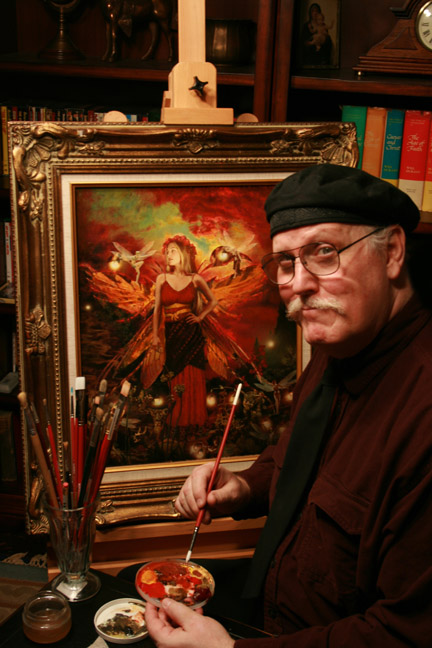
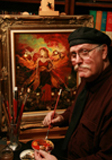
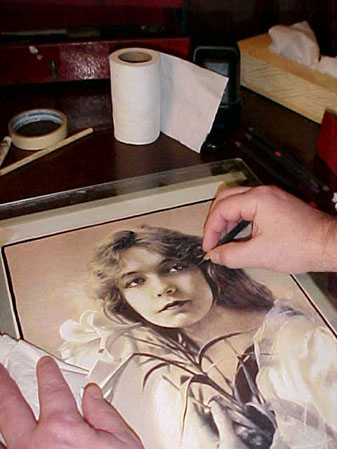
A Traditional style portrait of the artist. [Photo by his son
Erich.]

|

Howard David Johnson is a contemporary
realistic artist and photographer with a background in the natural
sciences and history. After a lifetime of drawing and painting,
David works in a wide variety of mixed media ranging from oil on canvas
to digital media.
David's Traditional Realistic Art was exhibited in the British Museum
in London in 1996, ( 3 years before he got his first computer ) as well
as numerous American ones since, such as the Metropolitan Museum of
Art. David's realistic illustrations have made appearances in
every major bookstore and game shop chain in America as well as
magazines and educational texts around the world.
Some of his more prestigious clients have
included the National Geographic Society, the University of Texas, the
University of Cambridge in England, Paramount Studios, Universal
Studios, PBS TV, Enslow Educational Publishers, Adobe Photoshop, Auto
FX, Doubleday, the History Book of the Month Club, & J Walter
Thompson Advertising, just to name a few.
Working in a variety of media David offers his customers a variety of
options and more than three decades of experience. As a realistic
illustrator he has not only used the computer but has been involved in
the development and marketing of software for Adobe Photoshop. Digital
art, Colored pencils, Pastels, Mixed media, & also Oil Paintings
can also be commissioned for select projects.
|
|
Digital illustration projects
start at $500.USD. and group rates are available. David delivers custom
made copyright free illustrations & old fashioned customer service
when he does work-for-hire. To publish existing pieces of his
realistic art, David sells licenses starting at only $99.USD.
info@howarddavidjohnson.com
CLICK ON THESE LINKS OR
E-MAIL FOR THE JOHNSON GALLERIES' VARIOUS BUSINESS SERVICES:






Thank You For Visiting
the Norse Myths and Legends Art Page of
Howard David Johnson...
*****
|
This Art
Gallery has been honored by more than 25 million Unique Visitors
from
the Four Corners of the
Earth:
My Friends from around the world thus far :
England, Canada,
Scotland, Wales, Ireland,
Germany, France,
Monaco, Andorra, Italy, The Vatican
City State,
Greece, Macedonia, Cyprus, Turkey,
Belgium, Denmark,
The Faroe Islands, Greenland, Yugoslavia,
Macedonia, Croatia, The Czech Republic,
Bosnia, Herzegovina, Slovakia, Slovenia,
Luxembourg, Latvia, Estonia, Hungary, Bulgaria,
Lithuania, Poland, Austria, Romania,
Spain, The Russian Federation, Estonia,
Ukraine, Kazakhstan, Moldova, Malta,
Iceland, Finland, Norway, Netherlands,
Switzerland, Liechtenstein, Sweden, Portugal,
Albania, Armenia, Georgia, Slovak Republic,
Azerbaijan, Belarus, Kazakhstan, Gibraltar,
Israel, Palestinian Territories, Egypt,
Libya, Mali, Algeria, Niger, Saudi Arabia,
Oman, The United Arab Emirates,
Kuwait, Bahrain, Qatar, Yemen, Iraq,
Iran, Jordan, Syria, Lebanon,
Morocco, Ethiopia,
Eritrea, Liberia, The Republic of
Congo, Rwanda, Kenya, Angola,
Ghana, The Ivory Coast, Zambia, Zimbabwe,
Sudan, Nigeria, Namibia, Sudan,
Uganda, Kenya, Eritrea, Tanzania,
Botswana, Malawi, Senegal, Djibouti, Cameroon,
Chad, Gambia, Mozambique, Swaziland,
Lesotho, South Africa, Seychelles, Viet Nam,
Japan, South Korea, China, Hong Kong,
Macau, Mongolia, Mauritius, Singapore, Thailand,
Cambodia, Laos, Myanmar,
Macau, Malaysia, Taiwan, Nuie, New
Zealand, Fiji,
Cook Islands, New Caledonia, Vanuatu, American
Samoa, Australia,
Micronesia, Polynesia, Papua New Guinea, The Heard
and McDonald Islands,
The Philippines, Guam, Palau, Cocos Island, The
Kingdom of Tonga,
Malaysia, Brunei Darussalam, India,
Pakistan, Afghanistan, Bhutan,
Bangladesh, Sri Lanka, Chagos Islands, The Republic
of Maldives,
Turkmenistan, Kyrgyzstan, Uzbekistan,
Tajikistan, Azerbaijan, Nepal,
Indonesia, Chile, Argentina, Uruguay,
Paraguay, Brazil, Peru, Aruba,
Venezuela, Bolivia, Suriname, Guyana, Aruba,
The Dominican Republic, Guatemala, Costa Rica,
Colombia, Trinidad and Tobago, Antigua and
Barbuda, Barbados, The Virgin Islands, Saint
Lucia, The Netherlands Antilles, Panama,
Northern Mariana Islands, Saint Vincent &
Grenadines, Grenada, Ecuador,
Belize, Nicaragua, El Salvador,
Bermuda, Cuba,
Jamaica, Dominica, Haiti, Puerto Rico, Cayman
Islands, The Bahamas, Honduras,
Mexico,
Madagascar, Central African Republic, Ethiopia,
Gabon,
San Marino, Saint Kitts & Nevis
Anguilla, Burkina Faso, Equatorial
Guinea, Polynesia, Madagascar,
Mauritania, Burundi,
and my
home, The Great Free State of Idaho (USA)...
If your home
is not listed here please e-mail and tell us where you're from...
info@howarddavidjohnson.com
We love hearing from you! Your business,
letters & links are
always welcome. E-mail for courteous service...
"Lo there, do I see my
father- Lo there do I see my mother and my sister and my brothers - Lo
there I do see the
line of my people back to the beginning - Lo they do call to me - they
bid me to take my
place among them - in the hallowed halls of Valhalla -
where the brave shall
live forever!"
~ Reconstruction of a Viking
Funeral Prayer

Primary
Sources: [Norse Mythology]
THE EDDAS ~
The Poetic Edda & The Prose
Edda ~ Eddic Manuscripts / Manuscripts of Snorra Edda
Translations into English / Individual Eddic Poems
THE SAGAS
~ Icelandic Sagas and Thættir
Fornaldarsögur & Riddarasögur
Artistic
Acknowledgements:
These Mythic Art
creations take their inspiration from the realistic paintings of the
old masters just as the film West Side Story came from Shakespeare's
play Romeo and Juliet, who in turn copied it from Pyramus and Thisbe,
from Ovid's Metamorphoses. Our shared cultural heritage, great works of
art, literature, music and drama, cinema, folk tales and fairy tales
are all drawn upon again and again by the creators of new works. These
works in the public domain are both a catalyst and a wellspring for
creativity and innovation. Where would Walt Disney be without the
Brothers Grimm Hans Christian Anderson, or Victor Hugo? Where
would Aaron Copeland have been without American folk music? Or
Thomas Nast's Santa Claus without traditional images of Father
Christmas? Pablo Picasso without aboriginal African art? Public domain
appropriators, one and all. When America was formed, copyright law was
created to promote the public creativity and had 14 year terms to
reward the creators, but now with 100 plus year terms very little is
currently allowed to enter into the public domain and its preservation
is of the utmost urgency to our future cultural well-being. In keeping with art tradition and
etiquette following the exhibit , I mention some of the artists and
writers that have influenced me the most; William Bouguereau, John
William Waterhouse, Ivan Ivanovich Shishkin, Edmund Blair
Leighton, Howard Pyle, Arthur Rackham, Arthur Hughes, Dante
Gabriel Rosetti, Viktor Vasnetsov, Jean Auguste Ingres, Anthony Van
Dyke, Lawrence Alma-Tadema, Wallace Wood, Jack Kirby, Frank
Frazetta, Ray Harryhausen, H.G. Wells, Gustave Moreau, William Morris,
Henry David Thoreau, Will Durant, The Pre- Raphaelites, The Symbolists,
et al.
Thank You For Visiting the Paintings of Norse Myths and Legends
Art Gallery of Howard David Johnson... for essays and articles scroll
down...
All these pieces of art and the
text are legally copyrighted and were registered with the U.S.
Library of Congress Office of Copyright by the author, Howard David
Johnson All rights reserved worldwide.
*****
|
LIMITED
EDITION
[of
a maximum 1,000 prints per image]
PRINT-ON-DEMAND
Each
inspected, hand signed and numbered by the artist!
Gorgeous
Quality Printing!
For a LIMITED
time and a LIMITED print run most of the
illustrations in Johnson's vast portfolio are now available!
Free Shipping and
Handling on all orders!
A numbered
certificate of authenticity is included.
CHECK
OUT WITH

thejohnsongalleries@gmail.com
Sized
to fit standard frames!
20x16 inches [508x406mm] & 14x11 inches
[356x280 mm]
|
Poster
Size Art Reprints!
CLICK HERE FOR DETAILS

The Johnson
Galleries now prints these "in-house" with our new state of the art
Epson 7890 oversize printer on Epson 200 year premium
photo paper and canvas with Epson inks!
|
|
ABOUT THE ARTIST
"Those who are enamoured of practice without
science are like a pilot who goes into a ship without rudder or compass
and never has any certainty where he is going. Practice should always
be based upon a sound knowledge of theory, of which perspective is the
guide and gateway, and without it nothing can be done well in any kind
of painting."
|
Howard David Johnson is a contemporary
visual artist and photographer with a background in |
|
the natural sciences and history. He works
in a wide variety of media ranging from traditional |
| oils, pastels and others to cutting
edge digital media. He loves mixing media. This site features |
| examples of his Realistic Art, including
illustration, photography, experimentalism, and fine art. |
|
|
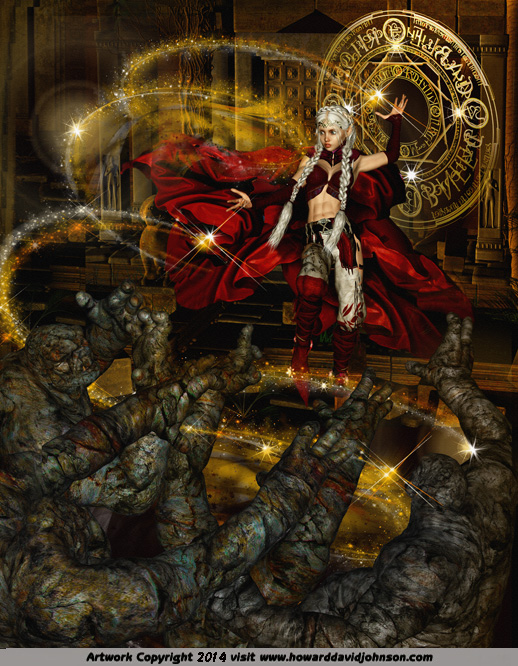
The
various galleries linked to by the icons above show many examples of His
Realistic Art, and are grouped by theme rather than media. There are
also sample illustrations from his upcoming books on Celtic Myth
and Legend and World Myth & Legend. Since boyhood he has
passionately copied the old masters. To create his work, he usually
starts with a thematic concept followed by a rough realistic
pencil sketch, then followed by his photography, often traveling to
find suitable scenes and locations and then working in his Photography
studio with live models from his sketches. He then assembles a variety
of elements which are realistic and original. As a boy he
dedicated his life to art in 1960. From 1965- 1999 he used xeroxes and
tracings to make his preliminary photo montages. This is patterned
after the manner used by Maxfield Parrish and other 19th century
notables. Beginning with a tracing, he then draws or paints from these
complex original Computer Photo Montages. Many of these are on display
on this web and slated for future completion in a variety of realistic
traditional art media. As this happens, the finished work is
substituted in the exhibit. Recently he shot hundreds of aerial photos
of clouds at marvelous angles and perspectives and also looking down on
the mighty mountains, rivers, and deserts of the American west while
flying from Texas to Oregon and back for dynamic source material for
realistic flying scenes in upcoming paintings , drawings, and
pictures.
|
|
His favourite medium for
realistic art is colored pencil because of the high speed and low
expense, and people began expressing difficulty in telling his colored
pencil drawing from photographs in the early 1980's. In the last
35 plus years he has also mastered Oils, Pastels, Acrylics,
Watercolors, Inks, Scratchboard, Gouache, Photography, and the highly
controversial digital media ( Art Numérica ) . As a commercial illustrator
Johnson has not only used the computer to create art but has been
involved in the development of computer imaging software. Working in a
realistic style inspired by classic illustrators HDJ is deeply rooted
and grounded in the Greco-Roman artistic tradition, Feeling that with
realistic art, the human form is the ultimate arena for artistic
expression. His lifelong dream came true when his Traditional Realistic
Art was exhibited in the British Museum in London England in 1996. His
mixed media has also been displayed in numerous other ones since
such as the Metropolitan Museum of Art. Having achieved international
acclaim as a traditional visual artist he discovered digital media ( Art Numérica ) in 1999. Because of his passion for realistic art and
photography he elected to embrace it and joyfully be a part of this
historic era in the visual arts as a 21st century realistic visual
artist. |
 |
Since 1972 when he began his career as a
scientific illustrator for the University of Texas he has earned his
living illustrating all kinds of books, magazines, CD covers, and all
sorts of games, greeting cards, calendars, portraits, murals and the
like with his contemporary realistic art... HDJ's Realistic Art has appeared in every major bookstore
chain and fantasy gaming shop in The United States and has been used in
educational texts and magazines all over the world. This site features
realistic paintings & pictures for the twenty-first Century
including some oil paintings, as well as lots
of other exciting media such as colored pencil drawings, pastel
paintings, acrylic paintings, gouache paintings, watercolor paintings,
and pencil drawings, and also featuring studio, field, &
aerial photography, digital painting and photo-montage and all
these media mixed in an assortment of experimental
combinations...Working in a wide variety of media to create his
realistic art he offers his customers a host of payment and product
options. He delivers the rights to these custom made copyright free
illustrations and old fashioned customer service when he does
work-for-hire. He loves to paint custom oil paintings and accepts
commissions with down payments starting at one thousand dollars. On his
existing works his low cost license offers start at only 100 dollars.
*****
All paintings,
pictures, & text (c) 2004-14 Howard David Johnson
All rights reserved
Thank You for
Visiting the Paintings of Norse Mythology Art Gallery of Howard David
Johnson...
*****
|
| |
Bonus Section:
Personal
Opinion Essays on Realistic Art yesterday and today by the artist.
In addition to his mastery of traditional
media, Howard David Johnson now combines drawing, painting,
photography, and digital media with more than thirty years of
experience in these fields to create his Realistic Art Numérica in 21st
century paintings and pictures.
Did you know the Greek word "Photography"
means "Painting with Light"? Today with the advent of computers it
truly lives up to it's name. Due to developments in Art and Technology,
a broader definition of painting is needed than that which is found in
common usage.
Announcing Art Numérica -an
exciting merger of traditional visual art and cutting edge
technology... a new art form for the twenty- first century... Art
Numérica is not limited to realistic art but also offers limitless
horizons for everything from cartoons to absttactions.
It is the most dramatic development in the
visual arts since the Renaissance. In the words of Al Jolson in the
movie world's first talking picture" You ain't seen nothin' yet!"
|
"THE
MORE THINGS CHANGE, THE MORE THEY STAY THE SAME..."
(A Brief essay dealing with attitudes toward
Traditional Realistic Paintings, Pastels, Colored Pencils and Art
Numérique )
|
"Painting, in art, the action of laying colour on a surface, or the
representation of objects by this means. Considered one of the fine
arts"
~Encyclopaedia Britannica.
"Painting. noun. 1.) The act or
employment of laying on colors or paints. 2.) The art of forming
figures or objects in colors on canvas or any other surface, or the art
of representing to the eye by means of figures and colors any object;
the work of an illustrator or painter. 3.) A picture; a likeness or
resemblance in shape or colors. 4.) Colors laid on. 5.) Delineation
that raises a vivid image in the mind; as in word painting.
~ Webster's Unabridged Dictionary of
the English Language
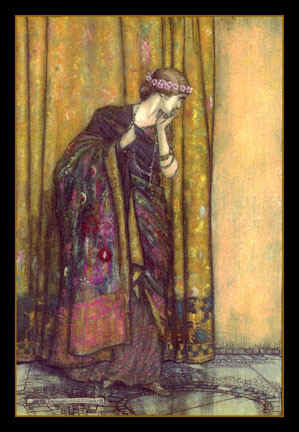
Pastel, Acrylics, and Colored Pencils
combined
|
Snobbism in the
arts is nothing new. Some people will tell you that oils are the only
valid medium for realistic paintings. That Colored Pencil, Digital, and
other Realistic Painting and Drawing Media are not valid for
"real" art. Young artists, Don't let them bother you. Their forerunners
used to condemn Pastels before they gained acceptance and called them
"crayons" when Johann Alexander Thiele (1685-1752) invented them.
Mercilessly disrespectful art critics of the time could not stop
the Experimentalists no matter how viciously they attacked and derided
them. "Crayon-painting" as it was called in England was practiced early
on by persecuted pioneers in Switzerland and many other nations. What a
debt we owe to these master artists who refused to knuckle under to the
pressure of those short-sighted critics during those historic and
experimental times. It took until 1870 with the founding of the
"Societe` Des Pastellistes" in France that respect came at last
to these heroic & immortal visual artists.
|
|
In England the liberation of the
Pastellists from slight regard and undeserved disrespect came with the
first exhibition of "The Pastel Society" at the Grosvenor Gallery in
1880. Pastel Painters like Mary Cassat and others from America
and other nations forever silenced the snobs with their
masterworks and gained recognition at long last for Thiele's invention
as a valid art medium. I am persuaded that history will repeat
itself. Like Pastels, I believe these wonderful new colored
pencils and even Digital Realistic Art Media will one day receive the
recognition they deserve as powerful mediums of artistic expression
just as pastel paintings did. What is your definition of art? Have
you thought about it?
Mine is: "anything that makes you feel
or think."
Consider dancing... it can be a
little skip in the step or rise to the level of the incomparable
Russian Ballet. Did you know that just the materials alone for a single
oil painting cost up to a thousand dollars these days? Even paying the
artist less than minimum wage no one but the super rich can afford them
anymore. Something's got to give. Realistic paintings in oil have been
highly prized for centuries and the appeal and following of realistic
art is undiminished to this day. Oil paintings featuring Abstract Art
and Realistic Art are generally the most treasured form of all the
visual art media and with good reason. But snobbish art critics
favoring abstract art have declared that realistic paintings, or
illustrations are not art for a century. With so many
representationalist paintings by so many immortal master artists
hanging in the Louvre, the Hermitage, and the British Museum and others
I think the disrespect for realistic illustrators that dominated the
20th century is academically ridiculous as well as vain and intolerant,
insisting theirs is the only valid opinion. What is your
definition of Art? I believe almost any form of human expression
can be raised to the level of "high art" especially visual art
and Realistic illustration...
|
|
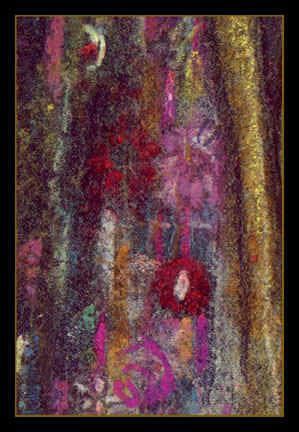
The detail reveals Realistic art and
abstract art combined
|
By my
own definition of art, which is: "anything that makes you feel or
think" most abstract paintings are not "real art" to me personally,
because abstract paintings usually neither make me feel or think,
usually focusing obsessively on technique and avoiding any coherent
content. I usually draw a complete blank mentally and emotionally when
I look at them. In 1979 the Houston Metropolitan Museum of Art
displayed a triptych of 3 giant paintings they paid fifty
thousand dollars for- three blank white canvasses entitled
"untitled". Then there was "The incredible new artistic Genius" with an
I.Q. of 62 ...Congo the chimpanzee with his gala New York art
exhibition...an elaborate prank played on the Snobbish American Art
critics about a generation ago by research scientists in the field of
primatology. Imagine how upset they were when he created one of his
"ingenious masterpieces" right before their eyes.
( My Source for this is
the Time Life Science Library volume entitled "The Primates". )
|
|
Art education has been almost
completely removed from American Schools as a result of generations of
this kind of fabulous nonsense contributing to America's cultural
illiteracy crisis. Now, the works of Leonardo Da Vinci, Michaelangelo,
and other notables are being removed from school libraries. After
generations of this, most American college graduates today cannot name
even one living visual artist, abstract or realistic.
There is no way that mandating more
math, requiring more reading, or scheduling more science will replace
what we have lost as a culture.
What is your definition of Art?
~HDJ
*****
|
| Note:
Abstract Paintings by Congo the Chimpanzee outsold Warhol and Renoir by
over 25,000 dollars in June 2005 at a London art auction. Born in 1954,
Congo created more than 400 drawings and paintings between the ages of
two and four. He died in 1964 of tuberculosis. There is no precedent
for this kind of sale. |
The Rebirth of Realism
More
thoughts on realistic art yesterday and today by the artist
Art History has entered a
new era with the birth of Art Numérica, or
digital art media in the 21st century. Artists
never stop exploring with mediums. Artists have been developing
techniques, experimenting with different tools since at least twenty-
five thousand years ago, when the first artist picked up a charred
stick and scratched a picture out on the wall of his cave. You'd think
everything would have been tried by now, but it hasn't. Exploring new
mediums this very day is just as exciting, just as full of freshness
and newness as it ever was.
|
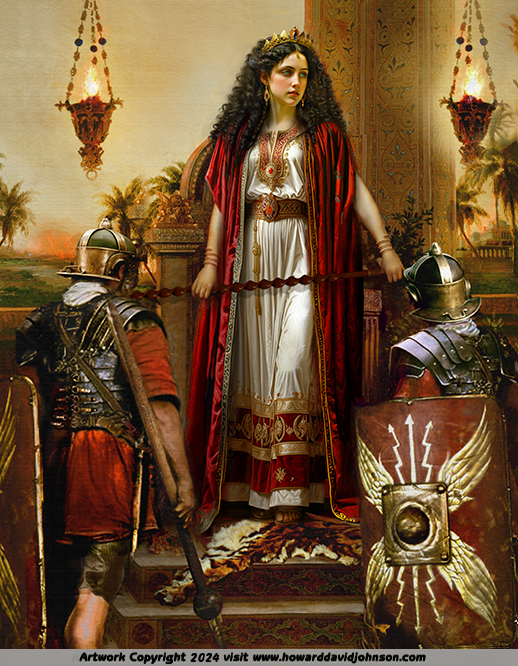
Photography, Drawing, Painting and
Art Numérica combined
|
The creation of
Realistic art has been the goal of most artists since the dawn of
civilization. Realistic art was the pride of ancient Greece. The
world's greatest museums are full of realistic art. Realistic art WAS
art until the advent of the abstract expressionist movement in the
twentieth century. The coming of the camera in the nineteenth century
changed realistic art forever. Suddenly, realistic art was not the only
way to create realism in portraits and historical records. The work of
the realistic artist was suddenly made into an expensive luxury. The
political power of the realistic artist was broken and they were no
longer an indispensable member of society. Hostility to the creators of realistic art goes back to
ancient times and the jealousy of advisers to the Pharaohs and others
who were not able to spend as much time with their rulers as their
portraitists. Although with the aid of photographs,
realistic art achieved levels of excellence undreamed of, the realistic
art movement of the late nineteenth century was short. |
|
None of these people earning
their living creating realistic art could compete with the speed and
low cost of photographic portraiture. Determined to survive,
great realistic artists like Pablo Picasso ingeniously turned inward
and began to explore things that could not be photographed in a new
school of art, abstract expressionism. The day of the fine art
superstars had arrived. It was now largely just a hobby to abstract and
realistic artists alike. Illustration, because of advances in printing
technology enabled an elite few to earn a living with their realistic
art. These illustrators working in realistic art media were
condemned and ridiculed in much the same way Europe's great symphonic
composers were condemned for working in motion pictures after fleeing
the nazis during World War Two. The rift between realistic and abstract
art grew wider and wider. The universities and key media usually sided
with the abstract camp and derided anyone working in any realistic art
media declaring boldly that realistic art was not "real" art. Immortal
giants of realistic art such as Maxfield Parrish were mistreated their
entire lives. They were accused of selling out for creating beautiful
pieces of realistic fine art to earn a living. The attitude that the
true artist must suffer and starve and die in poverty became a rule.
There were the Abstract art superstars, the professional realistic
illustrators, and the hobbyists who, although cut off from gainful
employment and social influence still recognized their artistic gifts
as a calling rather than a profession. |
Early abstract art
masters proved themselves as realistic artists before delving into
realms of the intangible. They had to do this at that time to prove
themselves because of the challenges they faced from the establishment
for going against the status quo. In the latter part of the 20th
century, realistic artists like HDJ were challenged to do abstract art
to prove themselves as shown in the example above (Deirdre of the
sorrows). Later realistic art training was abandoned in most schools
and things like splattering paint in fits of rage were deemed
more than enough. By the end of the 20th century something as
destructive and ridiculous as nailing a pack of cigarettes to a shoe
was considered fine art but not realistic paintings. Fashions in art
have often been as silly as fashions in ladies hats. As the
century drew to a close, many people had had enough. The realistic
revolt was at hand. The rebirth of realism was fueled by the advent of
the digital era. Now, for the first time in almost two centuries, an
artist or illustrator could earn a decent living again with his
realistic art. This is historic. Realistic art is not going to go away,
especially now that photography has truly merged with traditional
realistic visual art. Photography comes from the Greek words meaning
"painting with light". Now with the advent of digital media the
capability of realistic art has become almost limitless, truly,
"painting with light". The merger of all the world's art forms to
realize the potential of motion pictures has come now to still
realistic art media. This website for example, combines music, prose,
poetry, photography and traditional realistic art media to create an
experience beyond merely looking at realistic paintings.
The
twenty- first century is already seeing a new renaissance in the arts
because of the world wide web. There has never been anything like it.
Abstract art, computer art, photographic art, and realistic art are
continuing to be separate schools of art but are also blending to
create exciting new horizons. Although Digital art does offer
completely new horizons to the artist in the 21st century it does not
mean the end of our time honored art traditions. Instead, it offers
additional ways to keep these traditions and schools of thought
fresh and alive. ~ HDJ
*****
|
|


A.K.A.
Teutonic
Mythology - Nordic Mythology -
Scandinavian Mythology - Norse Myths -
Myths of the Vikings
- Legends of the Aesir and the Jötung
|
  |
Educational
Multi-Media Mythic Art Galleries
ARCHIVAL
REPRINTS
LICENSES CUSTOM BOOK COVERS
ORIGINAL ART ART INSTRUCTION
ART BOOKS

Thank You For Visiting
the Norse Myths and Legends Art page of Howard David Johnson...

*****
|