|
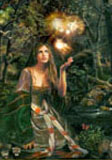
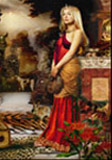
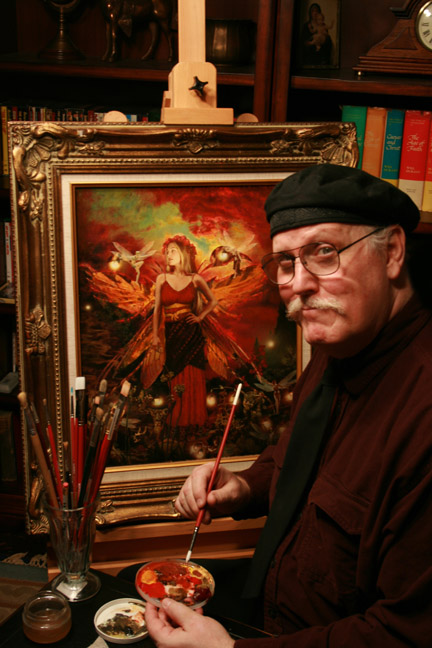
Tolkien's Legendarium; The Elves: An exhibition of portraits and illustrations of our folklore heritage with names and exordiums by Contemporary American Illustrator Howard David Johnson, whose illustrations of Mythology and History have been published all over the world by distinguished learning institutions and publishers including the Universities of Oxford and Cambridge. An introduction in portraits, illustrations and word paintings that hopefully will enrich your Tolkien Journey... |
|
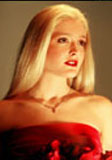
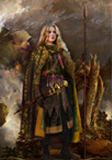
Finwë , First High King of the Noldor Elves of Valinor. When Morgoth and Ungoliant attacked and stole the light of the Two Trees, He was the only one who was brave enough to stand against them at the gates of Formenos after the theft of the Silmarils and it cost him his life |
The First Age of Tolkien's Legendarium; a re-imagining In the early years of the 20th century, legendary author and scholar J.R.R. Tolkien saved much of our cultural heritage from oblivion by collecting Western folklore and legends in the same way Aesop and the Brother's Grimm had done with fables and fairy tales. He did not invent the Elves but compiled Northern European folklore and used his extensive knowledge of the legends and old languages to name them and the things and places in his stories. His son Christopher made it his life's work to make available his extensive unpublished works. These are the inspiration for the portraits and illustrations in this exhibit... |
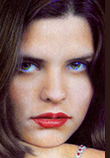
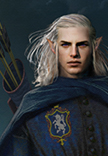
Celeborn, Lord of Lothlórien and husband of Galadriel. He was said to be one of the wisest and most powerful Elves in Middle-earth. He defended Lothlórien and led the assault on Dol Guldur playing an important role in major battles during the First and Second Age in the War of the Ring. |




THE DAWN of the FIRST AGE
Tolkien's First Age, the longest of Arda's Ages, is primarily divided by its two time-reckonings: "The early Years of the Trees"- before Sun & Moon and "The later Years of the Sun." The first elves awoke at the Cuiviénen lake in Middle-earth, a process initiated by the creator, Eru Ilúvatar, under the newly created stars. The very first elves to awaken were three pairs: Imin and Iminyë (the first), Tata and Tatyë (the second), and Enel and Enelyë (the third). They were followed by a series of other elves whom they discovered and awoke in groups, ultimately leading to the formation of the three kindreds: the Minyar, Tatyar, and Nelyar. The Awakening: The event took place during the Years of the Trees, long before the Sun and Moon, and is known as the "Awakening of the Elves". 144 were in this group consisting of 72 couples. The first elf to awake was named Imin (meaning "First"), and the first elf to see the stars was also Imin, whose name is linked to the stars being created by Varda. Founder of kindreds: Imin, Tata, and Enel later became the respective founders of the three main groups of Elves, the Vanyar, Noldor, and Teleri. The first Elves, awakened at Cuiviénen, were Imin, Tata, and Enel, along with their spouses.

"Imin, the first Elf" |
"Iminyë, spouse of Imin" |

"Tata, the second Elf" |
|
THE PINNACLE of ELVEN GLORY The First Age saw the ascendancy of Elven Craft. The Elves of the First Age, particularly the Noldor who had lived in the Blessed Realm of Valinor, were at the absolute peak of their power and skill. Divine Tutelage: Many Noldor were personally instructed by the Valar (angelic beings), most notably the Vala Aulë, the master smith. This direct access to divine knowledge was crucial to their skill. The Light of the Two Trees: Elves born or who lived in Valinor were "powered up" by the light of the Two Trees, granting them greater physical and spiritual potency, which infused their creations with unique power. Legendary Creations: The apex of their craftsmanship saw items of unparalleled power and beauty, most famously: The Silmarils: Crafted by Fëanor, the greatest of the Noldorin smiths. These three jewels contained the actual light of the Two Trees and could not be broken by any living force. Powerful Arms and Armor: Swords like Glamdring, Orcrist and the dragon-helm of Dor-lómin were products of this era, imbued with lasting enchantments and superior durability.
|
||

"Tatyë, spouse of Tata the second"
|

"Enel the third elf"
|

"Enelyë, spouse of Enel the third"
|
|
THE YEARS of the TREES The Awakening of the Elves marked the beginning of the First Age. After their awakening, these first Elves dwelled by the shores of Cuiviénen, where they invented languages, poetry, and music, and called themselves the Quendi ("those who speak with voices"). The major events involving the elves in the First Age include the Awakening of the Elves in Cuiviénen, The Great Journey: The Vala Oromë discovered the elves and guided them on the Great Journey towards Valinor, though many were afraid and refused to go. The Sundering: The elves were sundered into three groups: the Vanyar, the Noldor, and the Teleri. The Teleri lagged behind, and some never reached Valinor, becoming the ancestors of the Sindar and Nandor. , the creation of the Silmarils by Fëanor, and the Flight of the Noldor from Valinor after. This led to the wars in Beleriand between the Noldor and Morgoth, Morgoth, with the help of the evil spirit Ungoliant, destroyed the Two Trees of Valinor and killed Finwë, Fëanor's father, stealing the Silmarils in the process. the founding of secret cities like Gondolin, and eventually the War of Wrath.
|
||

"Queen Míriel, Finwë's 1st Wife "
|

"King Finwë, from the Tatyar line of Tata and Tatië"
|

"Finwë's 2nd Wife -Indis of the Vanyar"
|
|
The Line of Finwë, First King of the Noldor Finwë,
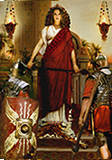
the first King of the Noldor's first wife was Míriel, who, uniquely among immortal Elves, dies while giving birth to their only child Fëanor, creator of the Silmarils or "The Jewels of Light".
Tolkien called Míriel's decision to let go of life disastrous; he associated it with the Biblical Fall of man. Scholars have debated whether Finwë and Míriel were to blame for the subsequent disastrous history of the Elves in Middle-earth.
Fëanor was the eldest and most beloved son of Finwë and succeeded him
as King of the Noldor. After a time, Finwë remarried with Indis of the Vanyar, the Fair-Elves of Ingwë
and had four more children; Fëanor's half-brothers Fingolfin and
Finarfin, and half-sisters Findis and Irimë. Though he loved his father as dearly as a son could, Fëanor was not fond of his stepmother Indis nor her children and so lived apart from her and his half-siblings.
|
||

"Írimë, daughter of Finwë and Indis"
|

"Feanor, son of Finwë and creator of the Silmarils"
|

"Findis, daughter of Finwë and Indis"
|
| In his youth
Fëanor
studied under Mahtan, a great smith from whom he learned metallurgy
who in turn studied under Vala Aulë the Valar master smith and Fëanor
became a master craftsman. He wedded Mahtan's daughter Nerdanel, who bore him seven sons: Maedhros, Maglor, Celegorm, Caranthir, Curufin, Amrod, and Amras. Spending most of his time either alone or with his sons, so much so that they were all completely loyal to him. Fëanor was
also possessed of exceptional oratory skill, and could persuade virtually anyone through speechcraft. The Silmarils were three great jewels created by Feanor in Valinor, who captured and blended the pure light of the Two Trees of Valinor into a crystalline substance he created called silma. His inspiration is said to have come from the light within the hair of Galadriel, which he tried unsuccessfully to obtain a strand of before creating the gems to outshine it. The jewels were then blessed by Varda, the queen of the Valar, making them sacred and able to scorch any unclean or evil hands that touched them.
|
||
|
"Fingolfin's Ñoldorin host Journey to Middle-earth" |

"Feanor, Creator of the Silmaril Jewels" |
"Varda Elentári, Valar Queen of the Stars" |
|
THE LATER YEARS of the SUN Dating from the first sunrise the term"First Sunrise" marks the start of the Years of the Sun, a pivotal moment where the Moon (from Telperion) and Sun (from Laurelin) were created by the Valar after the destruction of the Two Lamps, awakening Men in Hildórien, leading to Morgoth's terror, and seeing the arrival of the Ñoldorin host of Fingolfin reaching Middle-earth, marching into the plains of Dor Daedeloth and challenging Angband. These events usher in the First Age, a prolonged war against Morgoth, with the Ñoldor and Men fighting for survival and the Silmarils, shifting the world from the darker Years of the Trees to the vibrant yet perilous Years of the Sun. Key Events include: The Wars of Beleriand; A long period of conflict where Elves (Noldor, Sindar) and Men (Edain) fought against Morgoth. The Battle of Sudden Flame, the Quest of Beren and Lúthien, the Battle of Unnumbered Tears, the Fall of Gondolin, and the Sack of Nargothrond. The War of Wrath was The final, devastating war where the Valar intervene, leading to the defeat and expulsion of Morgoth from the world, the sinking of Beleriand, and finally, the close of the Age.
DIVISIONS and CONFLICT
|
||
|
"King Fëanor, half brother of Fingolfin"
|
"Melkor, Fallen Angel of the Valar"
|
"Prince Fingolfin, half brother of Fëanor"
|
|
Fingolfin was a Noldorin prince of the First Age, son of Finwë and his second wife Indis. Neither he nor his brothers were particularly close to Fëanor; their elder half-brother had been opposed to his father remarrying, and thus he was rather scornful of them. Nonetheless, they lived in peace for many centuries. The peace of Valinor was ended when Melkor, the most powerful of the Valar and the source of evil in Arda, was released from imprisonment. Of the three clans of Elves in Aman, only the Ñoldor welcomed him, as his knowledge was the greatest of any of the Valar. Gaining their confidence, Melkor was slowly able to spread lies among them causing divisions and destroying trust. One of the lies was that the sons of Indis, of which Fingolfin was the eldest, were trying to usurp Fëanor as the rightful heir of Finwë and seize the Silmarils for themselves. Melkor and Ungoliant the evil spirit in the form of a giant spider attacked the Two Trees in Valinor, piercing them with his poisoned lance and Ungoliant draining their sap until they died, creating the "Darkening of Valinor".
|
||

"The Two Trees of Valinor" |
 "Melkor with the Stolen Silmaril" |

"Melkor and Ungoliant Killing the Trees of Valinar" |
|
|
||
| After destroying the Two Trees Melkor fled north to Formenos
(Fëanor's fortress), murdered Finwë (High King of the Ñoldor), and stole all the gems, including the three
Silmarils. After his father's
murder and the theft of the Silmaril Jewels Fëanor is livid with
rage with Melkor, whom he re-names Morgoth the "Dark Enemy of the
World", and at the Valar's desire to take the gems for
themselves to restore the Trees he led the Ñoldor in rebellion
against Valinor. Together with his seven sons he swears the Oath of
Fëanor,
which binds them to fight anyone who withholds the Silmarils from
them. Morgoth then fled to his fortress of Angband in
Middle-earth where he placed the Silmarils in his Iron Crown, prompting Fëanor and his sons to pursue him to Middle-Earth.
These acts initiated the centuries-long conflict known as the War of the Jewels, as Fëanor and his sons fought to reclaim the gems from Morgoth's grasp.
|
||

"Fingolfin, son of Finwë, 1st High King of the Noldor"
|

"Anairë the Holiest, wife of King Fingolfin"
|

"Fingon, High-king of the Noldor after Fingolfin"
|
|
The WARS of BELERIAND The Wars of Beleriand were a series of major conflicts in the First Age between Morgoth's forces and the Elves (Noldor, Sindar) and Men (Edain), marked by pivotal battles like the Dagor-nuin-Giliath (under-stars), the lengthy Siege of Angband, the catastrophic Dagor Bragollach (sudden flame) that broke the siege, the devastating Nírnaeth Arnoediad (Unnumbered Tears) that shattered Elven power, and culminating in the War of Wrath, which ultimately destroyed Beleriand and defeated Morgoth. Key events include the arrival of the Noldor, the introduction of dragons and Balrogs, the fall of great Elven realms like Gondolin, and the ultimate sinking of Beleriand into the sea.
|
||
|
"The Rallying Cry of the Gondolindrim"
|

"The Defenders of Gondolin"
|

"Maeglin the Traitor"
|
|
The Hidden City of Gondolin, built by King Turgon, was a beautiful, secret Elven stronghold in a hidden valley, designed to defy Morgoth. The Messenger Tuor was sent by Ulmo, the Lord of Waters, to find Gondolin and warn Turgon of his doom, a warning Turgon tragically ignores. The Epic Betrayal: The city's location is eventually revealed to Morgoth through the treachery of Maeglin, who desired to be king which led to its ultimate destruction. The Great Powers of the Age ~ The story pits the ultimate evil of Morgoth against the intervention of Ulmo, highlighting the conflict between darkness and the small sparks of hope. Hope for the Future lay in The union of Tuor (Man) and Idril (Elf), and the birth of their son Eärendil, brings a new lineage and the promise of future intervention against Morgoth.
The FALL of GONDOLIN
|
||

"The Arrival of the Forces of Morgoth" |
"Buying time for refugees at Gondollin's back Gate" |
"The Breaching of the North Gate" |
|
The location of the Hidden City of Gondolin's was betrayed by King Turgon's nephew, Maeglin. Morgoth's surprise assault over the Encircling Mountains was a route previously thought impossible. The enormous army's expedition force came at night during the festival of the Gates of Summer. The hidden city was protected by highly fortified gates. The breaching of the North Gate was the pivotal moment in the Fall of Gondolin, when the forces of Morgoth broke the city's powerful defenses. Morgoth's army consisted of Orcs, Balrogs, wolves and dragons who attacked as mobile fire-spewing siege engines to burn and pound the walls and gates until they broke and Morgoth's forces flooded the city...
"The Battle in the Streets of Gondolin" The Battle in the Streets of Gondolin was a pivotal and tragic event in the First Age of J.R.R. Tolkien's Middle-earth, marking the fall of the last great Noldorin kingdom to the forces of Morgoth. The battle, detailed extensively in The Fall of Gondolin, involved desperate house-to-house fighting, the first recorded slaying of Balrogs by Elves, and several legendary duels. after the army breached the northern walls the battle quickly devolved into a chaotic fiery struggle throughout the city's wide marble-kerbed streets and beautiful squares.
|
||

"Fingon the Valiant, son of Fingolfin" |
"Glorfindel confronts the Balrog at Cirith Thoronath" |

"Maedhros the Destroyer" |
|
HEROES of the WARS of BELERIAND Elven Heroes of the Wars of Beleriand include: Fëanor, who fought and defeated the first wave of Morgoth's forces in the Dagor-nuin-Giliath before falling to Balrogs. Fingolfin maintained the Siege of Angband for centuries and famously challenged Morgoth to single combat, wounding the Dark Lord seven times and leaving him with a permanent limp before being slain. Fingon the Valiant, who rescued Maedhros from captivity and became High King after his father. He died in the Nirnaeth Arnoediad ("Battle of Unnumbered Tears"), beaten to death by Gothmog, Lord of Balrogs. Turgon, Fingolfin's other son provided refuge and military strength until the city's fall, and was father to Idril, whose son Eärendil would eventually bring aid from the Valar. Maedhros, the eldest son of Fëanor, was a great warrior and strategist who long held the March of Maedhros against Morgoth's forces. Finrod Felagund, the Noldorin King of Nargothrond who first befriended Men died defending the mortal Beren from Sauron in a duel of song and strength.
|
||
|
"Ecthelion, Slayer of Gothmog, Lord of Balrogs" |
"Turgon, King of the hidden city of Gondolin"
|

"Glorfindel, Lord of the House of the Golden Flower" |
|
Ecthelion and Glorfindel were both Elf-lords of the hidden city of Gondolin and perished in single combat with Balrogs during the city's sack by Morgoth's forces in the First Age. Ecthelion of the Fountain was the Warden of the Great Gate and fought valiantly in the city's main square, where he battled and killed Gothmog, the Lord of Balrogs and captain of Morgoth's forces, dying in the process. Glorfindel led his House of the Golden Flower during the battle and later guarded the rear of the escaping survivors. He sacrificed himself by fighting another Balrog on a narrow mountain pass (Cirith Thoronath), allowing Tuor, Idril, and the future hero Eärendil to escape. He and the Balrog both fell into the abyss, but his body was recovered and buried by the Eagles.
|
||

"Lord Thorondor of the Great Eagles" |

"The Fire Drake and the Flood of Orcs into Gondolin" |

"The Escape through Cirith Thoronath" |
|
The Eagles of Manwë, led by their lord Thorondor provided Guardianship of the Encircling Mountains. The Eagles had long been allies of King Turgon of Gondolin, nesting in the nearby Crissaegrim mountains and keeping watch over the area. Their presence prevented Morgoth's Orcs and spies from approaching the hidden city's borders, which helped Gondolin remain undiscovered for many years. After the city was sacked, a small remnant of survivors led by Tuor and Idril escaped through a secret way. As they navigated the dangerous narrow pass called the Cirith Thoronath (the Eagles' Cleft) in the mountains they were ambushed by Orcs. The Eagles arrived just in time. They swooped upon the Orcs, driving them away and casting them into the deep abysses of the mountains. This saved the lives of the remaining Elves and allowed them to continue their journey south to the Havens of the Sirion. THE FURY of the ORCS
|
||

"Boldog, A Captain and Champion of Morgoth's Army |

"Balcmeg, Mighty Orc-Lord of Morgoth's Army" |

"Orc-Lord Orcobal, Greatest Orc King of his time" |
|
Orcobal and Balcmeg were two prominent Orc-lords and notable champions during the First Age who participated in the Fall of Gondolin. Orcobal was called the "greatest Orcish King of his time" and the "chiefest champion" of the Orcs. He led the Orcs alongside Balrogs and fire-drakes during the assault on the Elven-city of Gondolin. Orcobal was killed by the Elf-lord Ecthelion of the Fountain, who "cleft the head of Orcobal their chiefest champion to his teeth" with his great sword. The slaying of Orcobal and other captains by Ecthelion and Tuor was considered the greatest killing of Orcs ever conducted by the Eldar up to that point. In the Fall of Gondolin Balcmeg, Boldog and Orcobal were three Captains who led Morgoth's Orc and Goblin armies in the First Age.
|
||
|
"The Legendary Ride of Fingolfin" |

"Eärendil the Mariner, Father of Elrond" |

"Elemmakil, Captain of Gondolindrim Patrols" |
|
Fingolfin, High King of the Noldor rode alone in despair and fury after the crushing defeat of Dagor Bragollach rode to the gates of Angband to challenge the Dark Lord Morgoth in single combat, a defiant act resulting in his death but crippling Morgoth permanently and becoming a symbol of Noldorin courage. Eärendil was a great Half-elf mariner whose voyage to Valinor and entreaty on behalf of the Children of Ilúvatar led to the defeat of Morgoth. He was the father of Elros, the first King of Númenor, and of Elrond, the Lord of Rivendell, an important figure in the Second and Third Ages. Eärendil carried a star across the sky at the end of the First Age and was placed in the sky as the Star of Eärendil, a guiding light. His acts had been prophesied among the Elves for centuries.
BEREN and LúTHIEN
|
||
|
"Lúthien Tinúviel, Daughter of King Thingol"
|
"Lúthien Singing Morgoth to Sleep" |
"Beren, Grandfather of Elrond" |
Beren and Lúthien tells the epic love story and quest of a mortal man Beren and an immortal elf-maiden, Lúthien. Beren encounters the beautiful Lúthien in the woods of Doriath and they fall in love despite her father King Thingol forbidding their union. To win Lúthien's hand, Thingol demands Beren retrieve a Silmaril from Morgoth's iron crown, a seemingly impossible quest. Beren, aided by the elf Finrod Felagund and company set out to face Sauron and fall into captivity. Lúthien, using her magic and skill escapes her father's watch, rescues Beren from Sauron's dungeons and defeats Carcharoth, the great wolf. They succeed in seizing a Silmaril from Morgoth's crown but Beren is slain by Carcharoth while escaping. This breaks Lúthien's heart and she dies of grief. Her spirit then journeys to the Halls of Mandos where she sings convincing Mandos to take steps leading to Beren's resurrection and her getting to choose to return in mortal form. Their story is central to the history of the First Age, culminating in their final deaths and playing a crucial role in the defeat of Morgoth.
|
||
"Olwë, High King of the Falmari" |

"Finarfin the fair, Leader of the Ñoldorin-Remnant" |
 "Eärwen, Princess of the Falmari Sea Elves" |
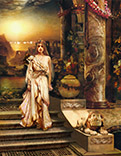
Eärwen was the daughter of Olwë, the High King of the Falmari, who married Finarfin, a prince of the Noldor. Finarfin was not present during the First Kinslaying, in which Fëanor and his followers attacked the Teleri to seize their "swan-ships". The kinslaying upset him deeply due to his wife Eärwen being the princess of the Falmari, whose people were the victims. She was mother to Galadriel's brothers, Finrod Felagund, Angrod, and Aegnor who were all prominent figures in the wars of the First Age against Morgoth. Finarfin was pardoned by the Valar and became the High King of the remnant of the Ñoldor who stayed in Valinor and led the Noldorin host in the War of Wrath as part of the great army of the Valar, in the final conflict against Morgoth at the end of the First Age.
|
||

"Maglor Cast his Silmaril into the Sea " |
"Eärendil set his Silmaril in the Heavens"
|

"Maedhros Casts his Silmaril into Fire" |
|
The Fate of the Silmarils: Maedhros and Maglor, the two surviving Sons of Fëanor, Still bound by their terrible oath to recover the Silmarils, stole the last two gems after the War of Wrath, but the hallowed jewels burned their hands. Maedhros cast himself and his Silmaril into a fiery chasm, and Maglor cast his into the sea, forever wandering the shores in grief. After the great Wars were fought over the Silmarils they were lost to the Earth the Sea and the Sky. The last of these was carried by Eärendil the Mariner who set it in the heavens to become the Morning Star. Eärendil married Elwing, the granddaughter of Beren and Lúthien and they had two sons: Elrond (Lord of Rivendell) and Elros (the first King of Númenor). According to the Valinorëan loremasters, the First Age ended precisely when the Sun first rose in heaven. However, for the loremasters of the Noldorin Exiles, the Age also included the next six centuries of their War against Morgoth until his final defeat. ************************** The MASTERY of TOLKIEN'S WORLD-BUILDING Tolkien's world-building is characterized by unparalleled depth, rooted in invented languages, deep mythology, and a historical tapestry spanning ages, creating an illusion of immense reality through suggested detail rather than explicit exposition, leaving much to the reader's imagination. Its primary world-building relies on this linguistic development, while its secondary world-building feels authentic due to its internal consistency and blank spaces, allowing for reader interpretation and a sense of ancient, vast history, though sometimes lacking practical details it focuses instead on grand, mythic events. Strengths of Tolkien's World-Building include its Linguistic Foundation: Tolkien, a philologist, built his languages (like Quenya and Sindarin) first, then created the cultures and histories that spoke them, lending incredible authenticity and depth. It's Mythic Scope: It functions less like a novel and more like ancient scripture or a history textbook, presenting a vast, often tragic, world where good triumphs but never easily, creating a powerful sense of legendary history. The Illusion of Depth: He masterfully uses blank spaces and allusions to events outside the immediate narrative, trusting readers to fill in the gaps, which makes the world feel far larger and more real than explicitly described. This creates Authenticity through Subtlety: Even without knowing linguistic or historical specifics, readers feel the world's reality because details like names and cultures sound authentic.
|
||


Thank you for visiting the Tolkien's Legendarium Art Gallery...
This is a work in progress. My fondest hope is that those of you who have never read Tolkien's sagas of the First Age of Middle-Earth will be inspired to begin your Tolkien Journey and that those of you who have read it before will have found new impulse to read them again. I encourage you to buy copies of your own available almost everywhere books are sold...
You can e-mail for more details at:
Your business, letters and links are always welcome!